Pest control services in Springfield safeguard structures against subterranean termites, seasonal rodent intrusions, and destructive insect colonies. Professional treatments utilize targeted perimeter barriers, baiting networks, and physical exclusion methods designed specifically for central Illinois soil profiles and building styles.
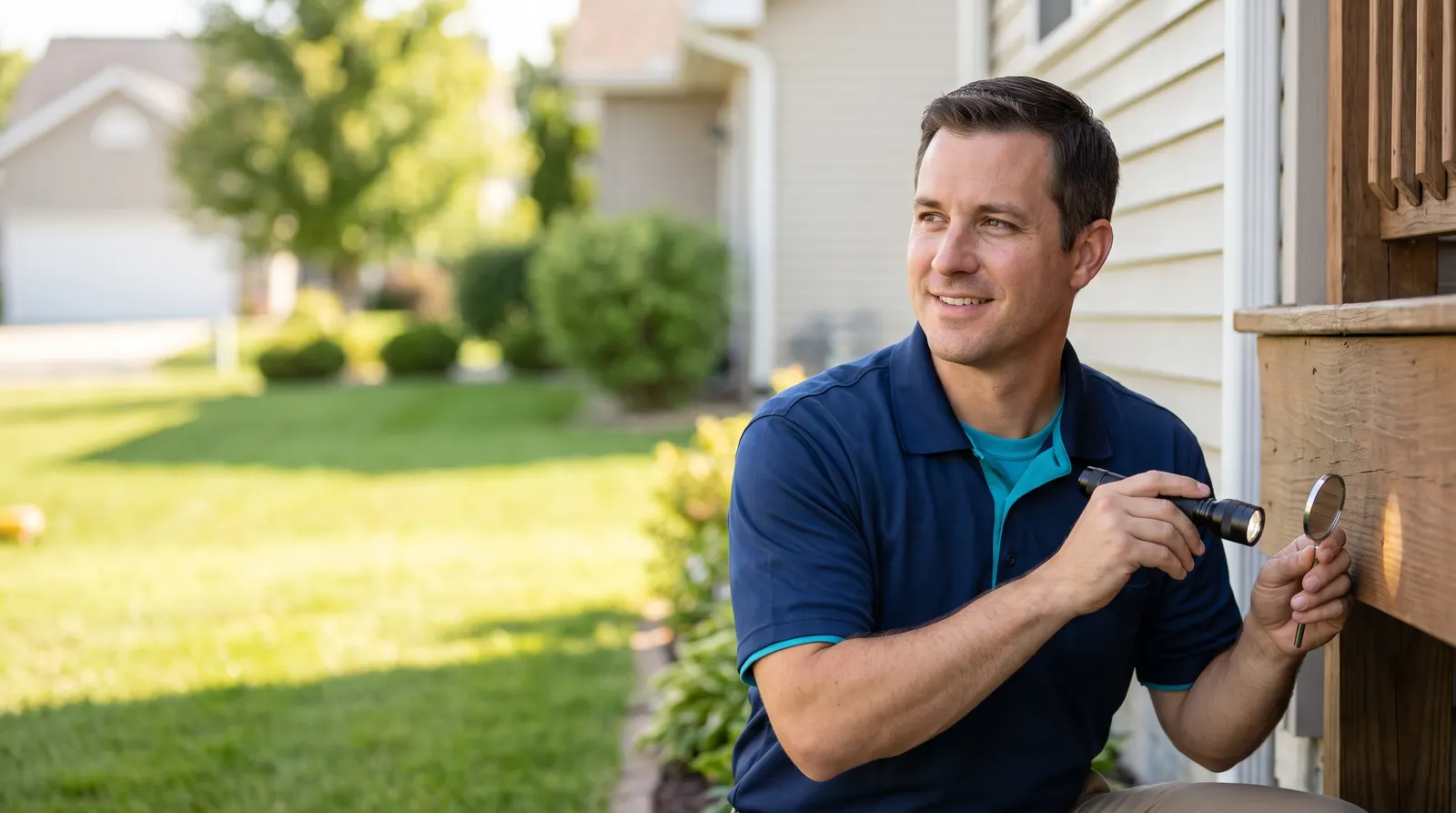
Pest control services in Springfield provide targeted scientific insect eradication, structural wood protection, and perimeter exclusion barriers for residential and commercial properties throughout Sangamon County.
Every service reflects the same meticulous attention to detail, whether it's a single job or a larger pest control services project across Springfield.
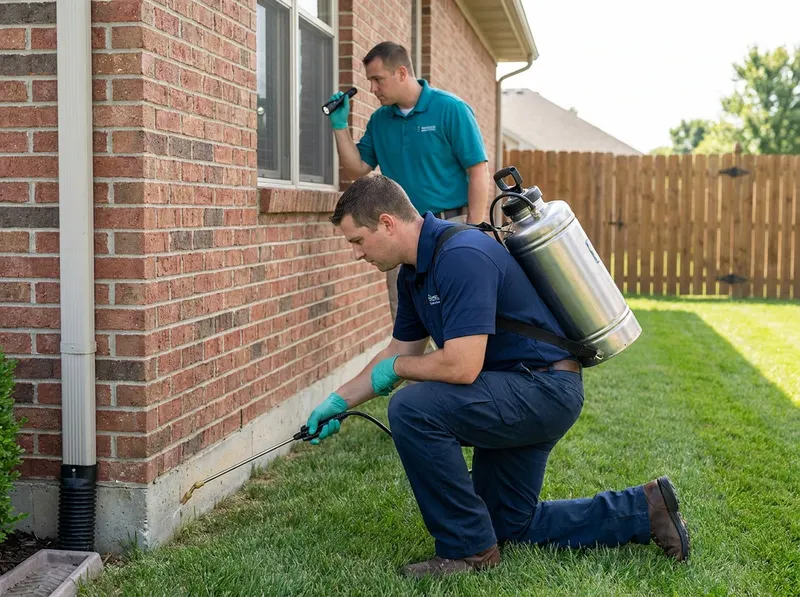
Systematic interior and exterior treatments designed to shield single-family homes, basements, and crawl spaces from recurring insect incursions through custom barrier applications. Treatment starts with a multi-point inspection of exterior brick weep holes, foundation sill plates, window wells, and utility line penetrations. Technicians apply targeted microencapsulated non-repellent barrier bands 3 feet up the exterior masonry and 3 feet out onto soil or gravel perimeters. Crawl spaces receive precision dusting behind rim joists to neutralize resting spiders and silverfish before interior entry occurs. Baseboards inside living spaces receive selective void treatments only where evidence indicates active activity, ensuring children and household pets avoid exposure to wet residues. Quarterly servicing intervals replenish degradation caused by rain wash-off, intense midwestern summer heat, and winter freeze-thaw cycles, maintaining an unbroken protective ring around residential footprints.
Get a quote →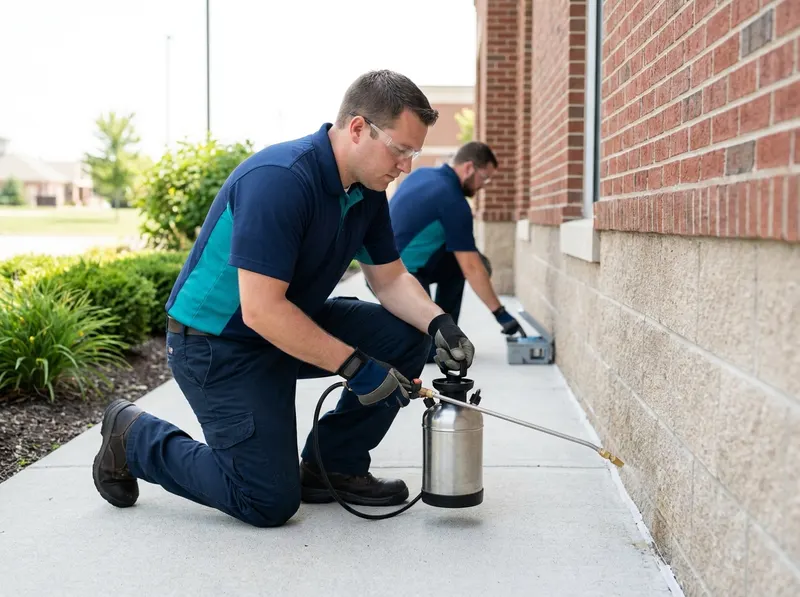
Facility-grade integrated pest management addressing regulatory compliance, documentation, and non-disruptive remediation for food service, healthcare, warehouse, and office environments. Programs comply with Illinois Department of Public Health standards and federal sanitation rules, maintaining detailed electronic logs of bait consumption, trap catches, and targeted applications. Food preparation zones utilize non-volatile gel baits and tamper-resistant mechanical traps placed along structural baseboards and processing machinery legs to prevent food contact contamination. Industrial warehouses benefit from wide-spectrum perimeter bait stations positioned every 30 to 50 linear feet along loading docks and exterior storage yards to intercept perimeter rodent vectors. High-density commercial properties along Dirksen Parkway and Clear Lake Avenue receive tailored servicing schedules that eliminate pest pressures without interrupting business workflows or customer operations.
Get a quote →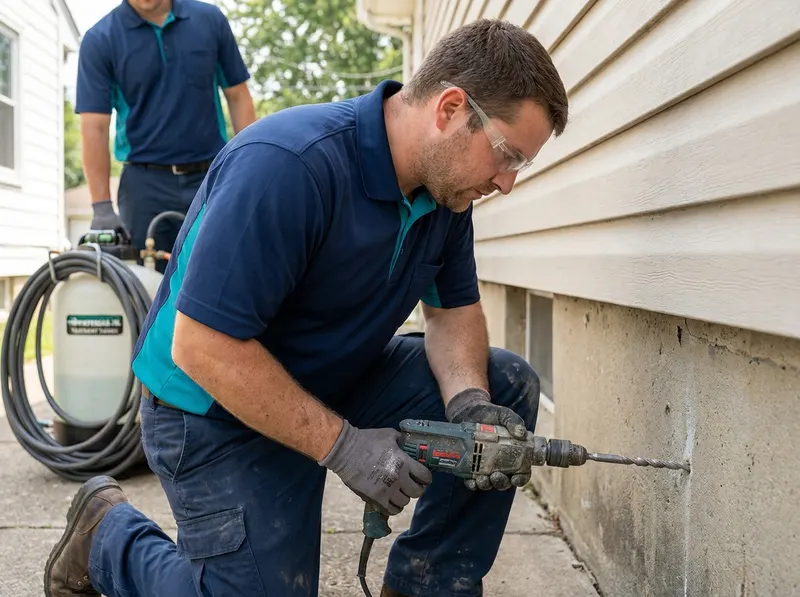
Subterranean termite liquid trenching treatments and monitored bait station arrays installed along structural foundations to arrest structural wood destruction. Because subterranean termites (*Reticulitermes flavipes*) build mud shelter tubes to travel from underground moisture pockets up to structural wood plates, defense requires breaking their soil pathway. Technicians dig 6-inch by 6-inch trenches directly adjacent to exterior foundation walls, injecting non-repellent liquid termiticides at a verified rate of 4 gallons per 10 linear feet per foot of depth down to the footings. Concrete slabs, patios, and attached garage floors undergo precision vertical drilling at 12-inch intervals to saturate underlying aggregate beds where termites penetrate expansion joints. Properties near sensitive water tables or extensive flagstone paving utilize exterior bait stations loaded with chitin synthesis inhibitors that foraging worker termites consume and pass to the reproductive queen, systematically collapsing the subterranean colony without invasive structural drilling.
Get a quote →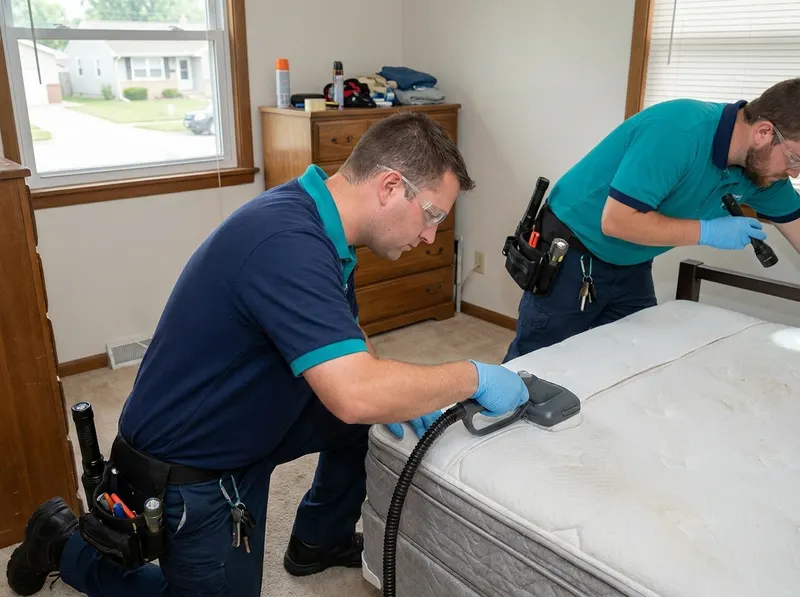
Comprehensive remedial treatments combining high-output structural thermal management, residual contact formulations, and insect growth regulators to eliminate all life stages. Technicians deploy industrial electric heating units and high-velocity axial fans to elevate indoor structural ambient temperatures to a verified range between 122 degrees Fahrenheit and 135 degrees Fahrenheit. This level of heat coagulates bed bug cellular proteins within eggs, nymphs, and adults hidden deep inside mattress tufts, behind crown molding, and within hollow furniture framing. In structures unsuited for thermal treatment, multi-tier chemical applications deliver botanical desiccants into wall switches, along carpet tack strips, and through baseboard perimeters. Follow-up monitoring includes bed-leg interceptor traps inspected across a 30-day surveillance period to certify that the breeding cycle is terminated and zero viable instars remain.
Get a quote →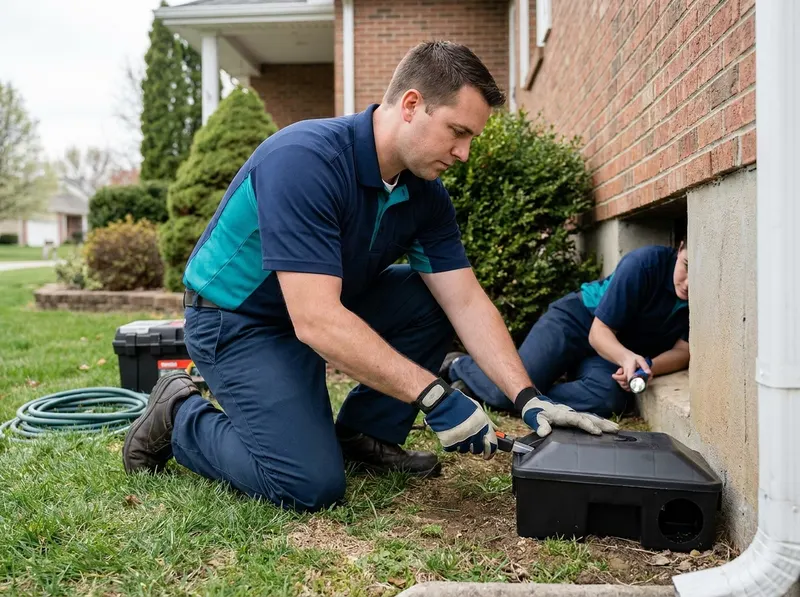
Systematic mice and Norway rat eradication incorporating structural pathway mapping, mechanical snap trapping, and exterior entry sealing down to 0.25-inch gaps. Field mice (*Mus musculus*) and Norway rats (*Rattus norvegicus*) navigate along utility conduits, water service entrances, and deteriorating basement window trim to enter structures during temperature drops. Technicians map primary runways using tracking powders and UV illumination, positioning heavy-duty mechanical snap traps inside secure structural runways rather than broadcasting toxic poisons indoors. Exterior entry holes, pipe collars, and missing mortar sections are permanently sealed using corrosion-resistant copper mesh, 16-gauge galvanized steel hardware cloth, and metal-reinforced hydraulic cement. Tamper-evident exterior bait stations loaded with first-generation anti-coagulants are secured to concrete pads along exterior perimeters to depress surrounding rodent populations before they establish structural harborage.
Get a quote →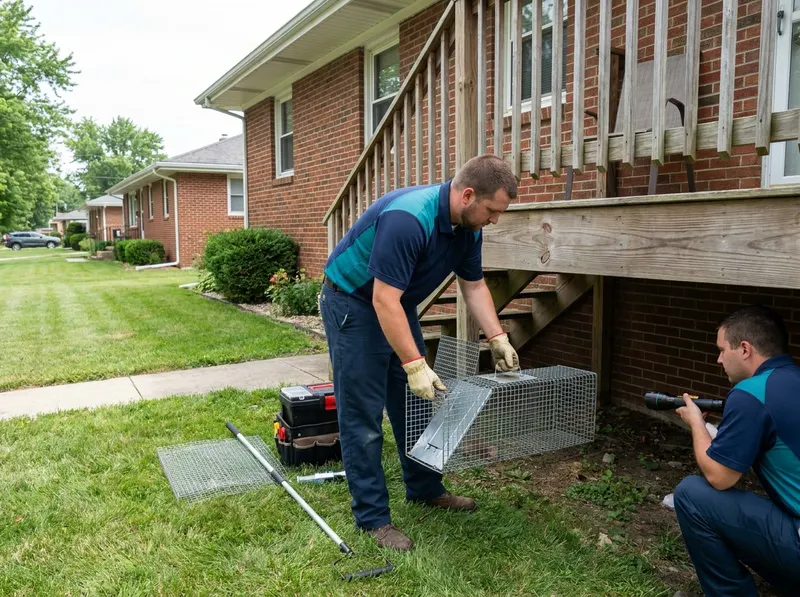
Humane trapping, physical removal, and exclusion repairs for raccoons, squirrels, opossums, and bats nesting inside structural attics, soffits, and crawl spaces. Central Illinois structures often suffer animal intrusion when aging soffit wood decays or chimney caps deteriorate. Technicians assess rooflines, gable vents, and foundation louvers to locate active nesting chambers and travel runways. Targeted live-capture cage traps are deployed along transit paths, checking traps daily in accordance with Illinois Department of Natural Resources regulations. Once animals are safely extricated, technicians install heavy-gauge metal exclusion guards over attic fans, custom chimney caps, and reinforced galvanized steel covers on crawl space vents. Contaminated insulation layers containing ectoparasites, urine, and droppings are removed, followed by bio-sanitizing treatments that neutralize hazardous pheromone odors and pathogens.
Get a quote →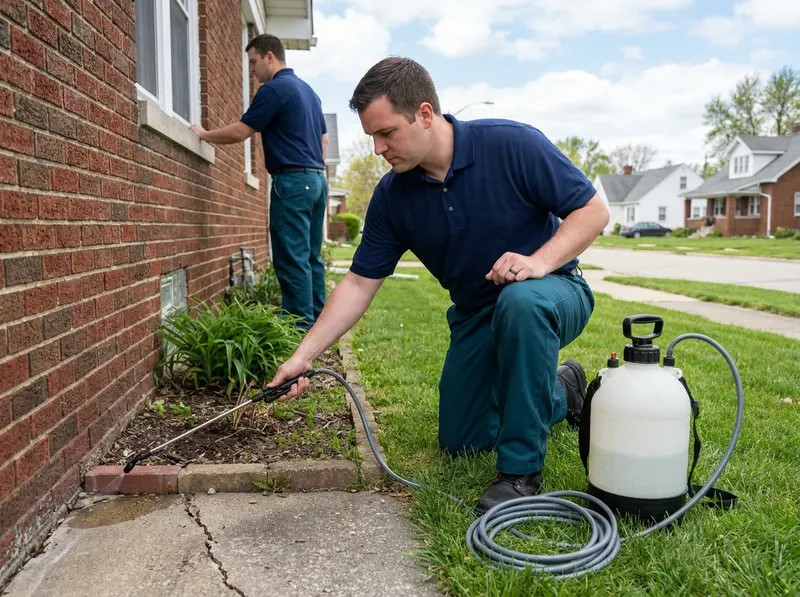
Species-specific baiting and perimeter barrier suppression for carpenter ants, odorous house ants, and pavement ants targeting central nesting queens. Carpenter ants (*Camponotus pennsylvanicus*) chew smooth tunnels inside water-damaged wall studs, fascia boards, and porch columns, depositing characteristic sawdust frass beneath entry slits. Technicians isolate structural moisture leaks, applying microencapsulated non-repellent residuals into targeted wall voids while distributing sweet or protein-based slow-acting matrix baits directly along outdoor foraging trails. Odorous house ants and pavement ants, notorious for colonizing concrete expansion joints and under slab plumbing lines, are contained through colony-wide transfer formulations that foraging workers carry back to the queen. Exterior tree branches contacting roof gutters are trimmed back to cut off aerial transit lines into upper-level soffits.
Get a quote →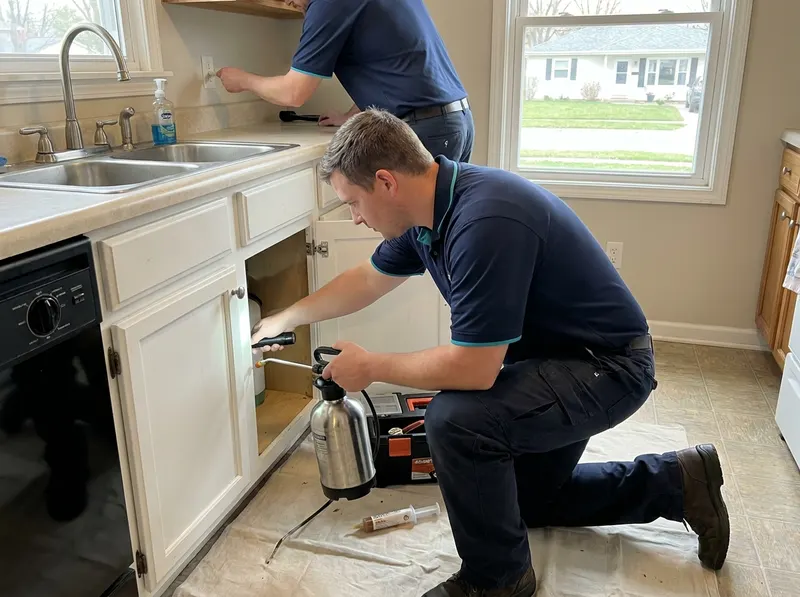
Intensive cleanout protocols utilizing precision gel baits, pheromone monitoring traps, and targeted insect growth regulators to eradicate German and American cockroach colonies. German cockroaches (*Blattella germanica*) reproduce rapidly inside warm kitchen appliance voids, cabinet hinges, and wall cracks near water sources, depositing protective egg cases (oothecae) containing up to 48 embryos. Technicians deliver precision dot applications of non-repellent matrix gel bait containing hydramethylnon or indoxacarb into structural crevices away from food contact surfaces. Liquid residual insect growth regulators are applied under sinks, behind refrigerators, and around plumbing pipes to disrupt juvenile molting and render surviving adults sterile. Follow-up visits check sticky pheromone monitoring stations to track population drop-off until zero life stages are detected across consecutive inspection cycles.
Get a quote →You get a firm, itemized quote for your pest control services before any work begins, no surprises, no pressure.
Careful prep, tidy work, and a full cleanup when we are done. We treat your home and belongings like our own.
The same trusted, background-checked team from the first call to the final check.
Selecting appropriate pest defense depends entirely on pest biology, structural construction, and severity of entry across central Illinois microclimates. If a property faces active subterranean termite swarms along foundation sill plates in older neighborhoods like Enos Park or Historic West Side, non-repellent liquid soil barrier treatments provide immediate perimeter coverage, whereas localized spot treatments leave unmonitored structural zones vulnerable. Liquid barrier applications require continuous trenching down 6 inches into the soil profile alongside concrete stem walls, applying roughly 4 gallons of finished emulsion per 10 linear feet.
If choosing low-profile bait station systems instead, subterranean workers ingest chitin synthesis inhibitors and distribute the active ingredient through trophallaxis to collapse the subterranean queen, offering non-invasive protection on properties with extensive concrete patios or sensitive wellheads. If dealing with German cockroach or bed bug infestations within multi-family dwellings or residential bedrooms, multi-stage targeted insect growth regulator (IGR) protocols combined with crevice applications eliminate breeding cycles, whereas standard consumer aerosol sprays cause colony budding and scatter insects deeper into wall voids. Thermal bed bug remediation heats rooms to lethal thresholds of 122 degrees Fahrenheit to 135 degrees Fahrenheit for 4 to 8 hours to penetrate baseboards, electrical junction boxes, and dense mattresses, whereas chemical-only protocols require 2 to 3 repeated visits spaced 14 days apart to intercept newly hatched nymphs.
For seasonal rodent intrusions during central Illinois harvest transitions, physical exclusion sealing with steel mesh paired with interior mechanical trapping permanently eliminates populations, whereas rodenticide baiting alone risks unretrieved carcass decomposition inside structural cavities. Exterior exclusion requires sealing gaps around plumbing penetrations, sill plates, and garage weatherstripping using 16-gauge galvanized hardware cloth and silicone-acrylic elastomeric sealants. The trade-off between quarterly perimeter defense programs and one-time emergency eradications centers on preventative barrier longevity versus recurring re-infestation risks during peak Sangamon County migration seasons.
A quarterly perimeter protocol maintains active synthetic pyrethroid or microencapsulated barriers before summer heat and autumn frost drive arthropods indoors, whereas ad-hoc reactive calls require higher labor hours for internal cleanouts and structural access remediation.
Every project gets a firm, written price after a free on-site visit. Ranges below for orientation.
Tell us about your pest control services job and we'll send a clear, written quote, usually the same day. Or just call and talk to a real Springfield pro.
(217) 931-1176
Springfield properties face distinct pest pressures driven by central Illinois agricultural harvest cycles, high humidity near Lake Springfield, and aging architectural foundations in historic districts like Enos Park, Vinegar Hill, and Hawthorne Place. Subterranean termites (*Reticulitermes flavipes*) thrive in Sangamon County's damp clay-loam soils, requiring deep perimeter trenching to prevent structural access through limestone sill plates and masonry foundation gaps. Older multi-family and historic brick buildings along South Grand Avenue and the Illinois State Capitol area frequently present structural settle cracks that serve as highways for odorous house ants and German cockroaches. Autumn temperature drops prompt field mice and Norway rats to seek thermal harborages within residential basements along the MacArthur Boulevard, Wabash Avenue, and Veterans Parkway corridors as thousands of acres of surrounding corn and soybean fields are harvested. Properties adjacent to Washington Park Botanical Gardens and Knight's Action Park encounter dense seasonal mosquito breeding due to standing water collections in mature tree canopies and localized drainage swales. Furthermore, neighborhoods near the Illinois State Fairgrounds and Abraham Lincoln Presidential Library and Museum see frequent commercial freight transit, increasing risks of hitchhiking pests such as bed bugs entering commercial facilities and hospitality properties. Professional treatments in these areas utilize customized physical barriers and microencapsulated products that withstand central Illinois summer humidity, heavy spring downpours, and sub-zero winter freeze cycles.
Free estimates for Springfield & the surrounding area.
 Havero Pest Protection